BERIEV HOUSING
TULLUM | MÉXICO
CO-AUTOR LUIZ SAKATA
1.390 M²
2019
⌥ PREMIADA
POR
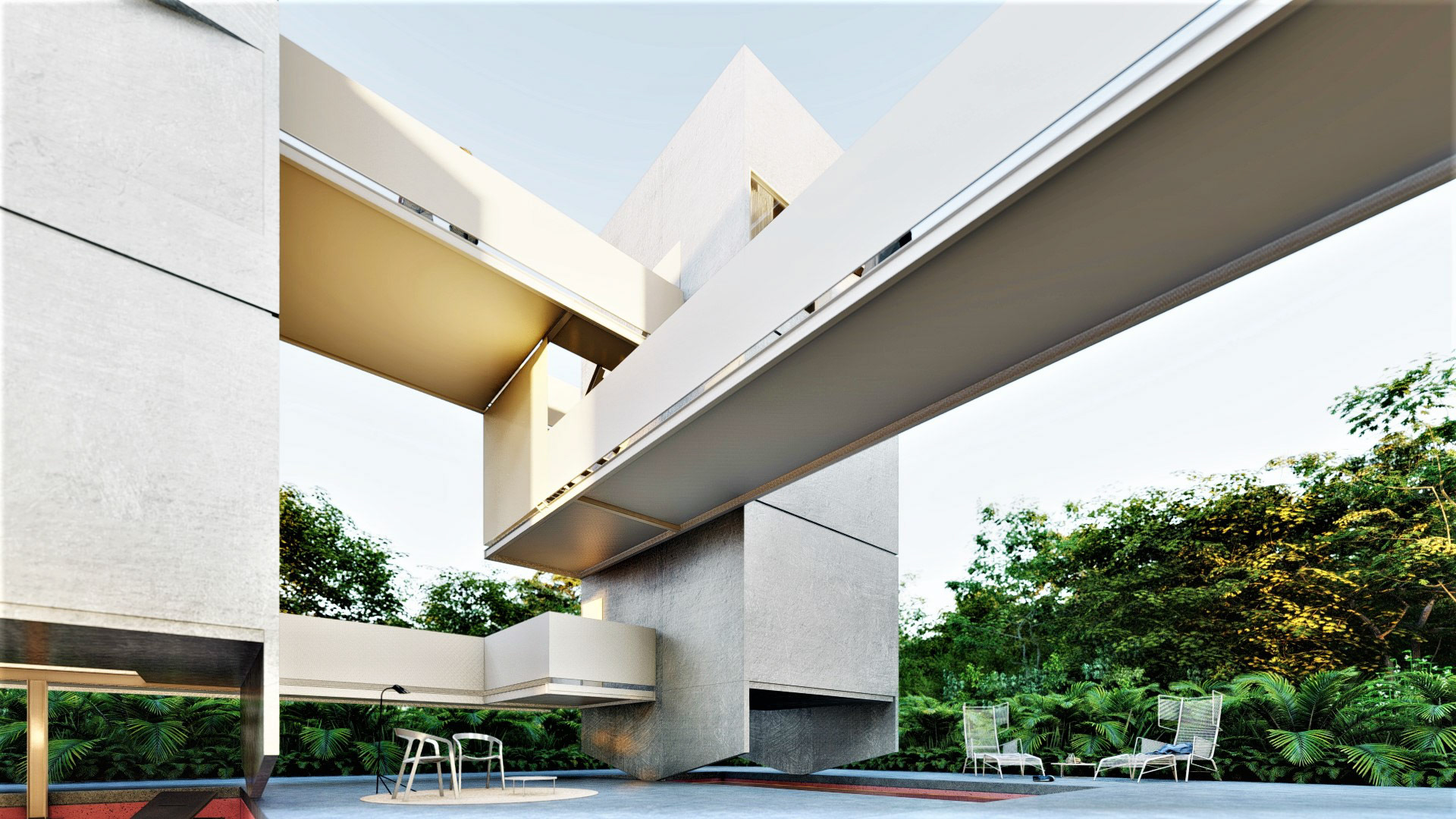
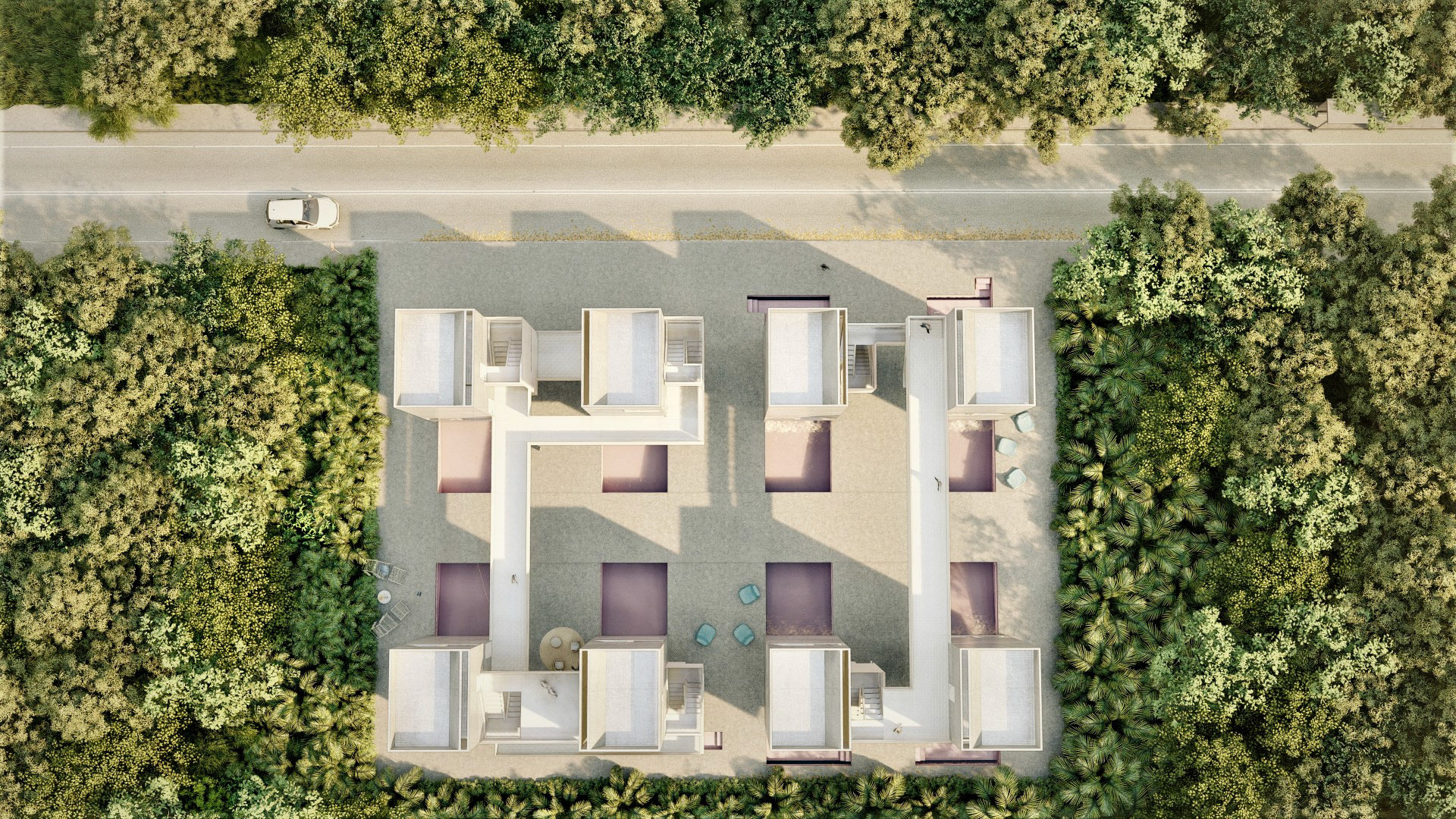
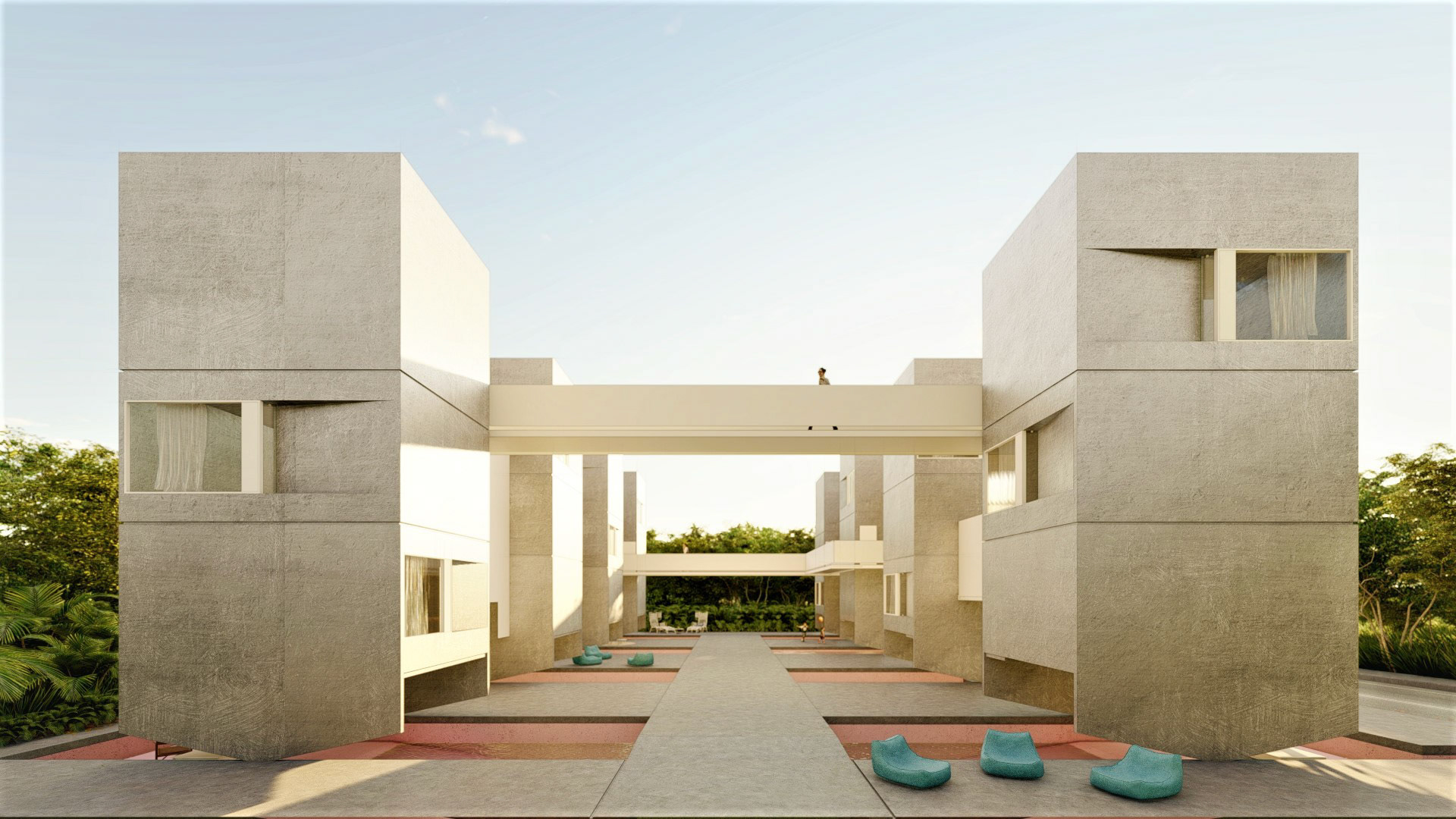
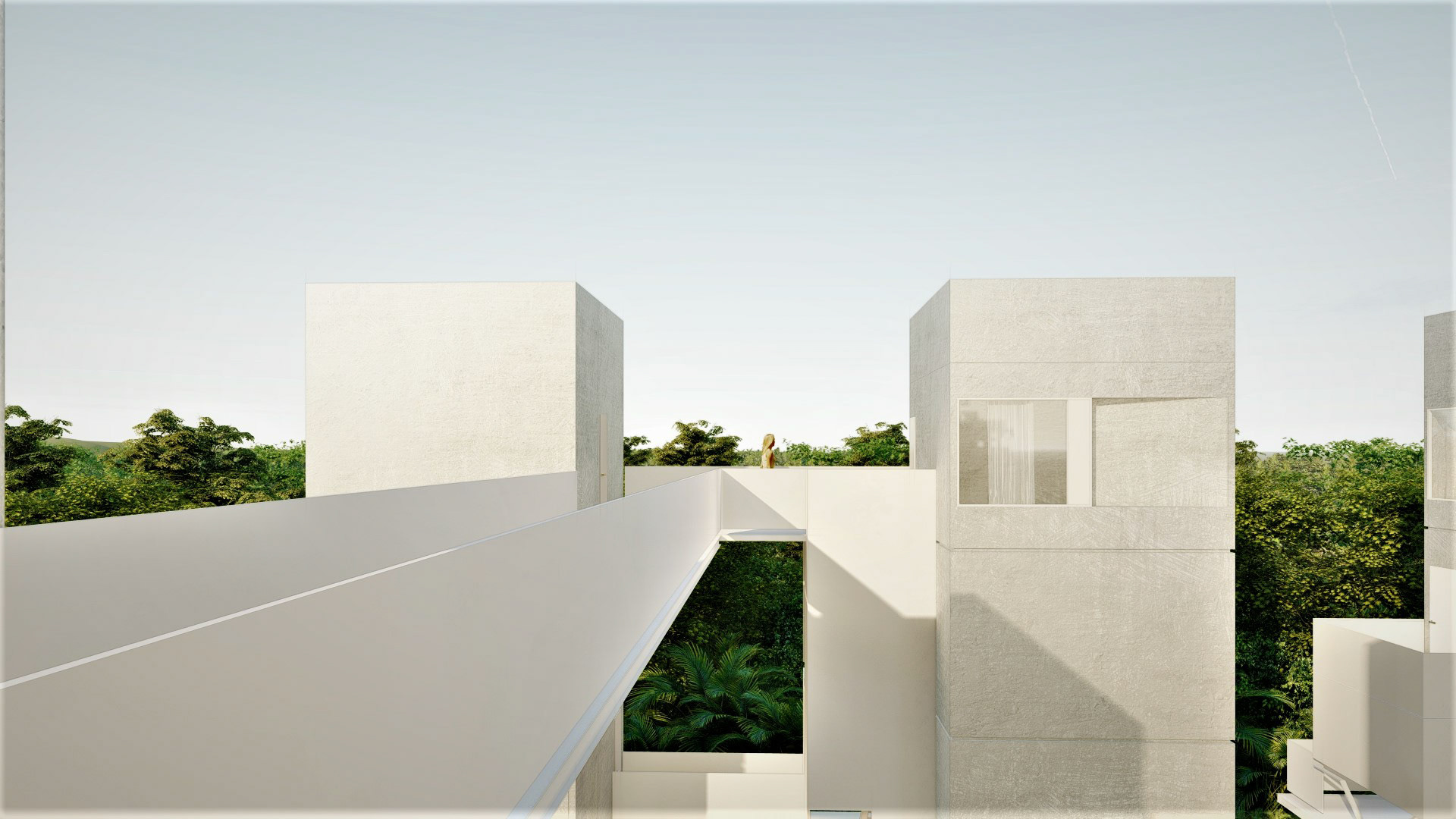
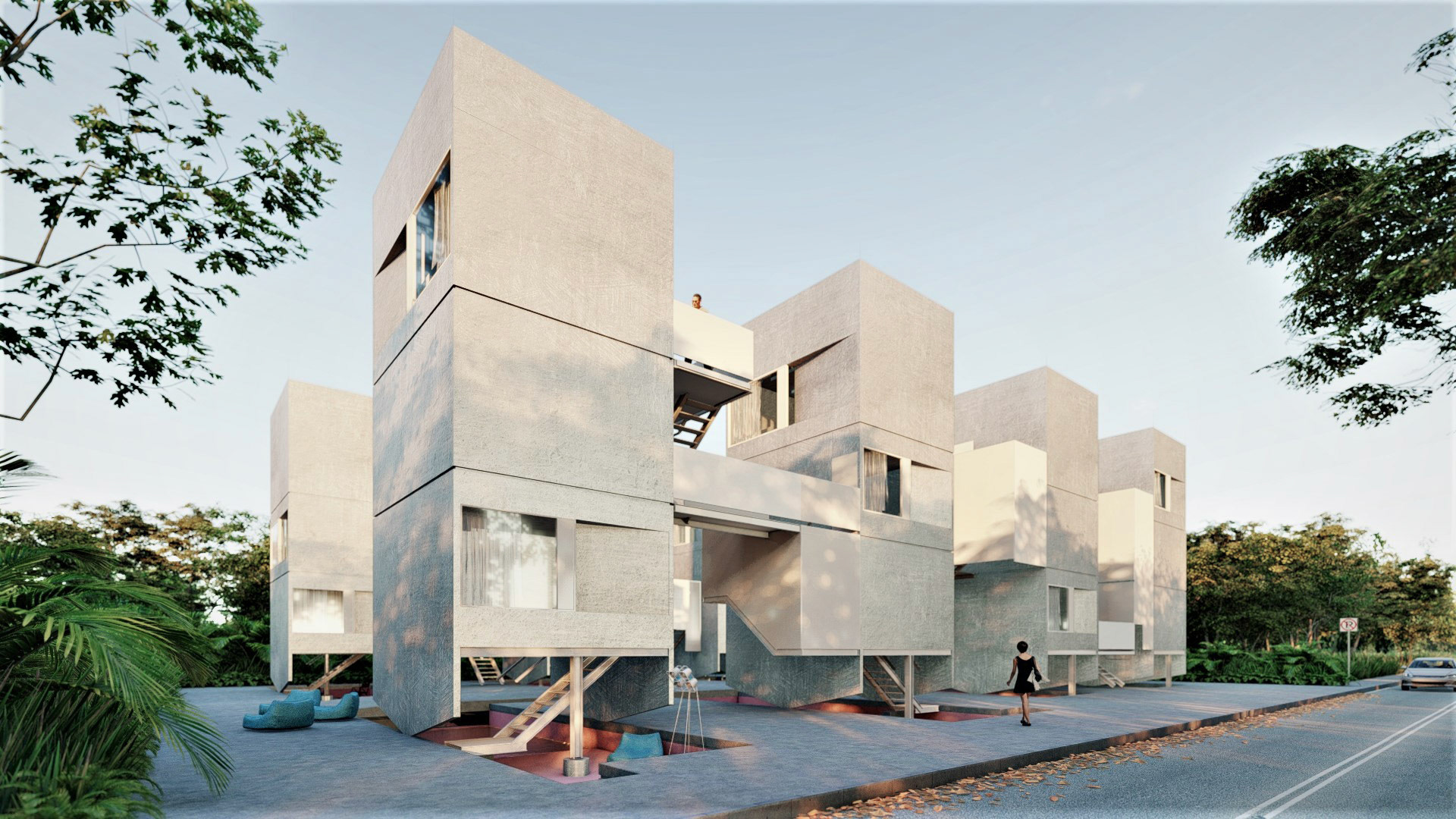
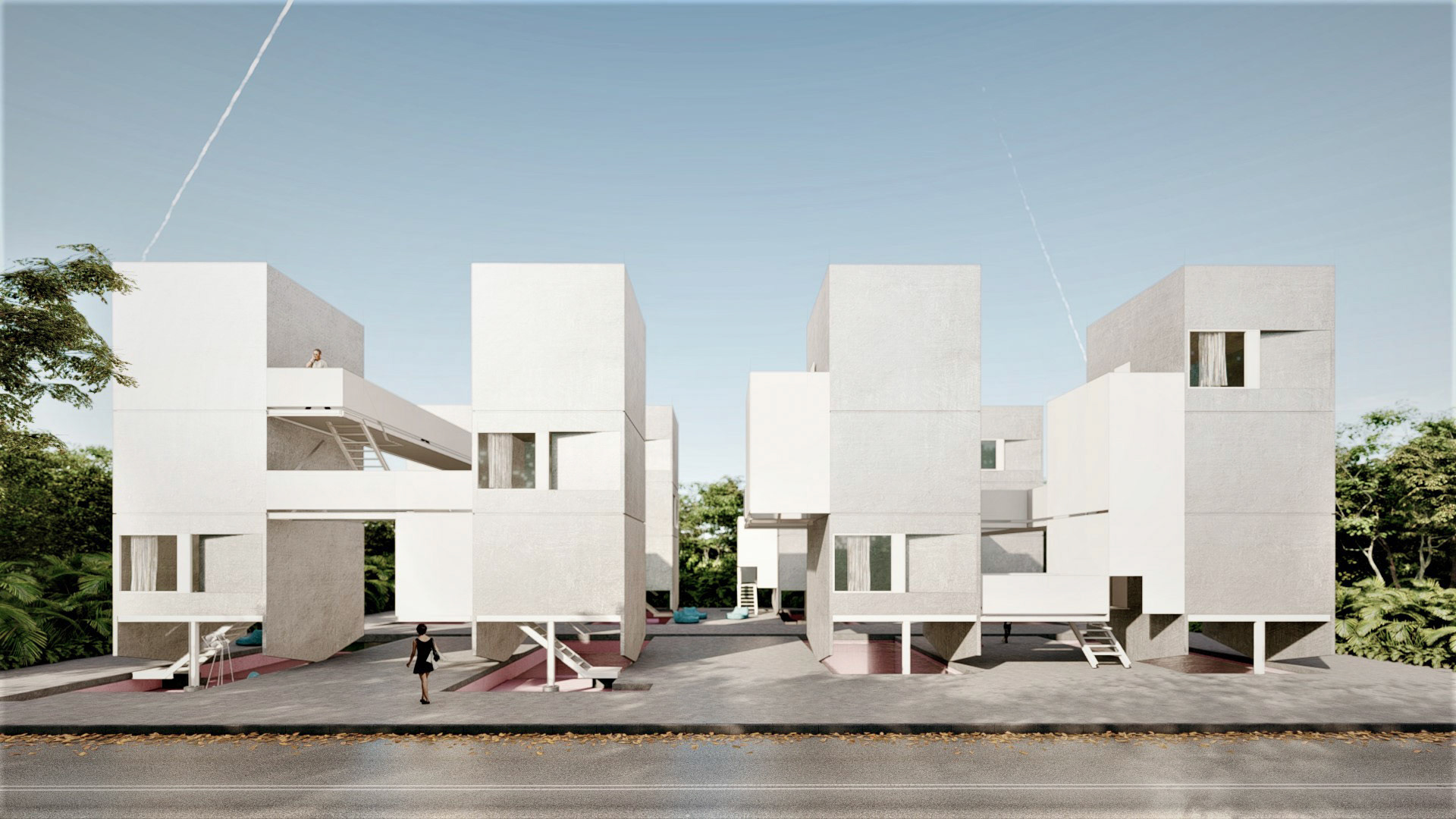
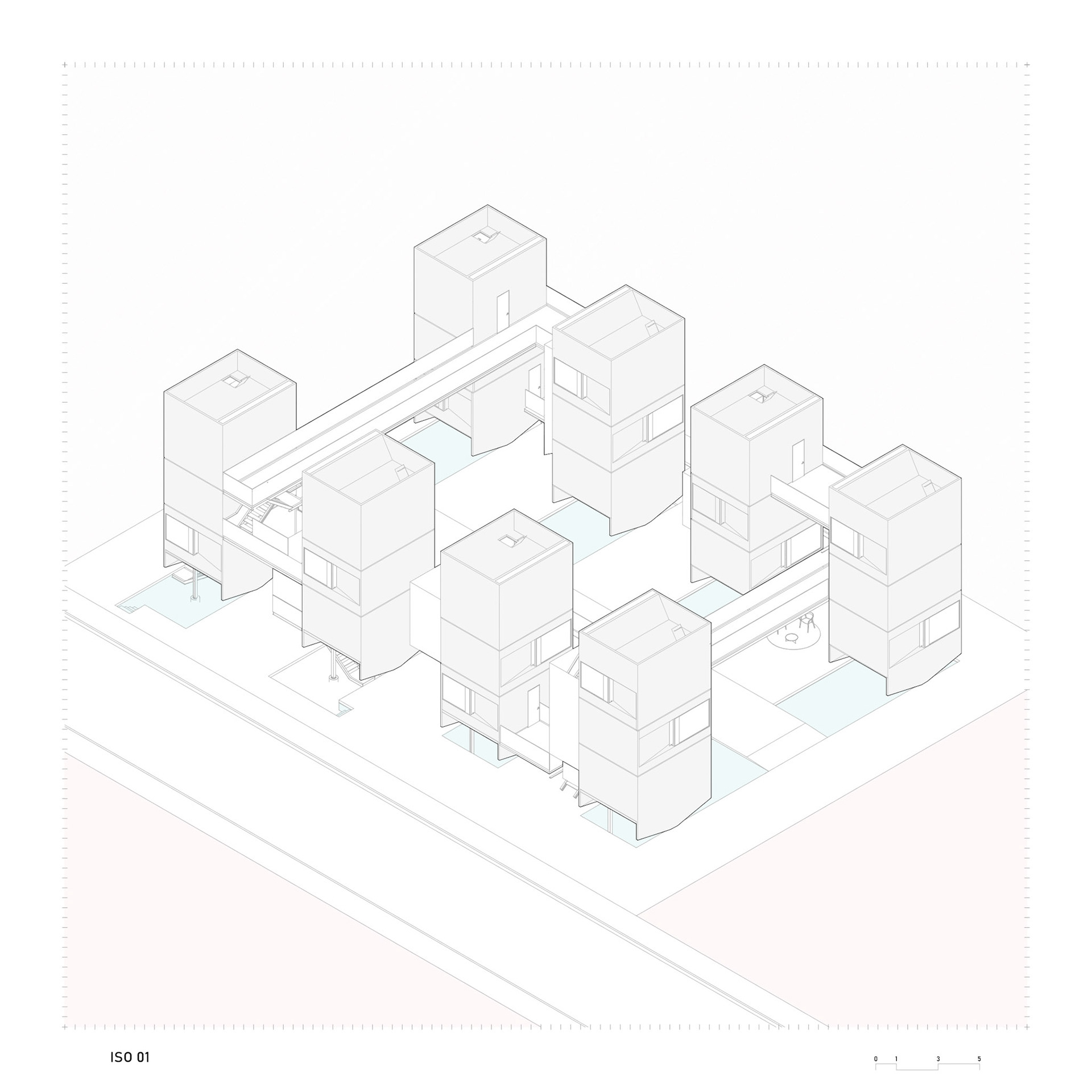
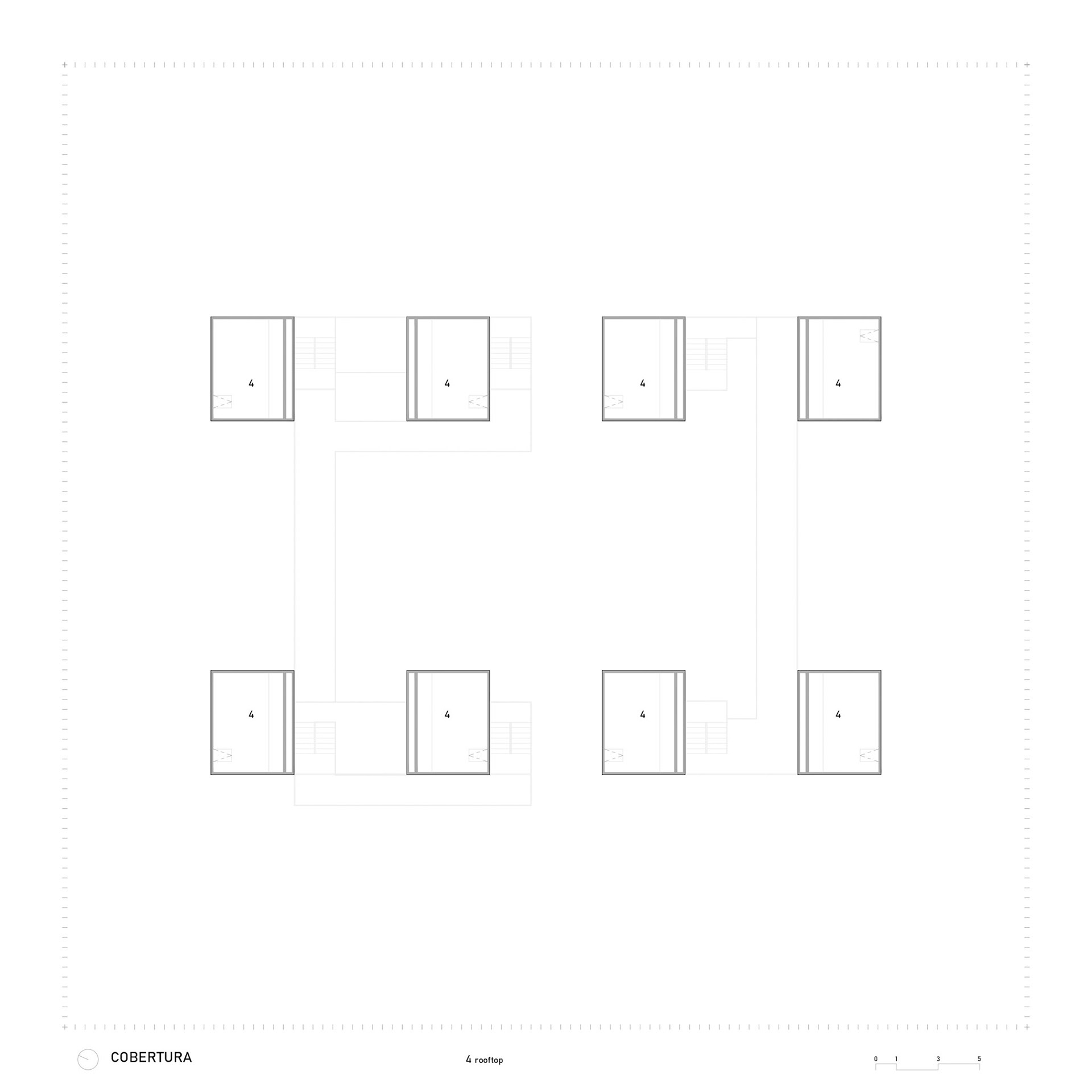
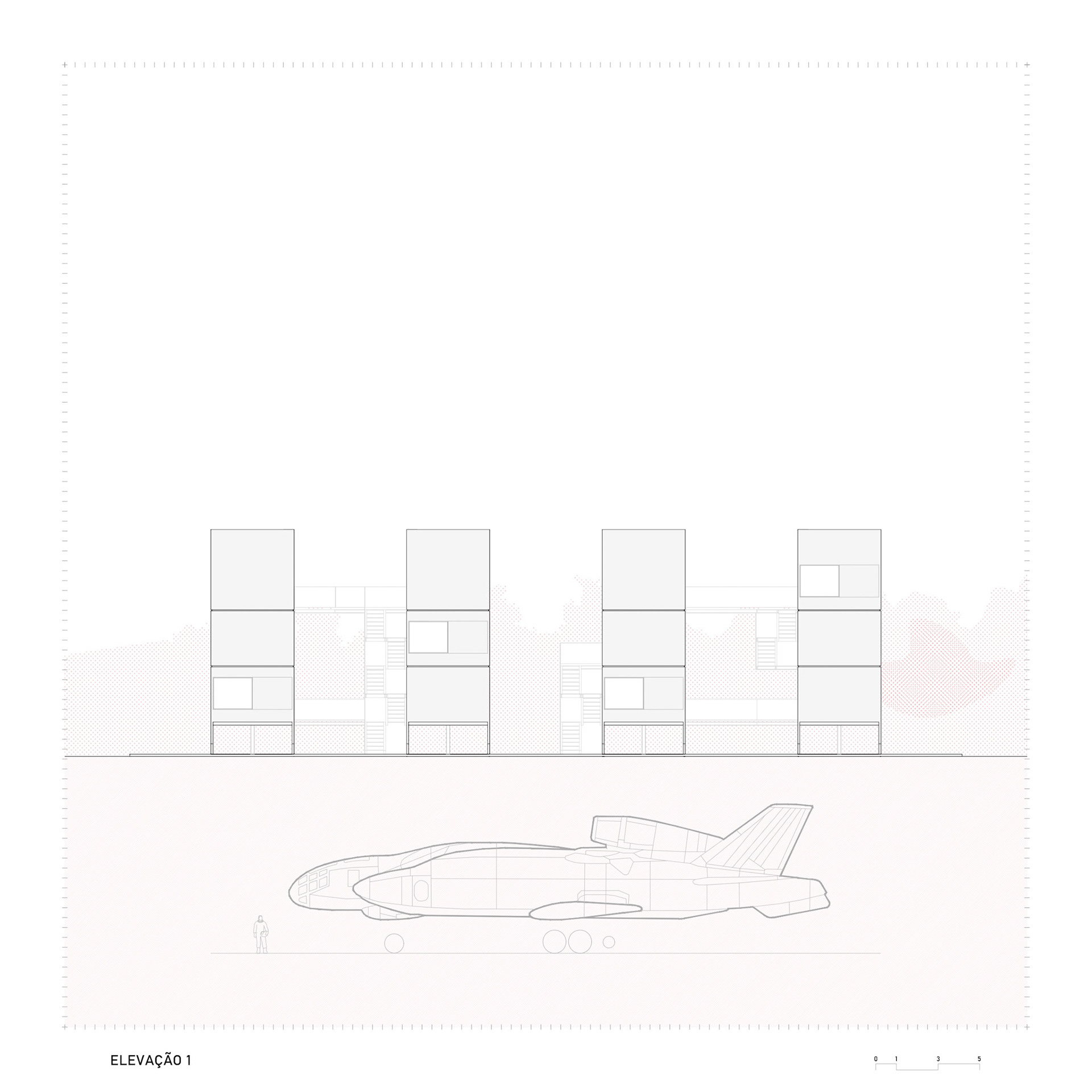
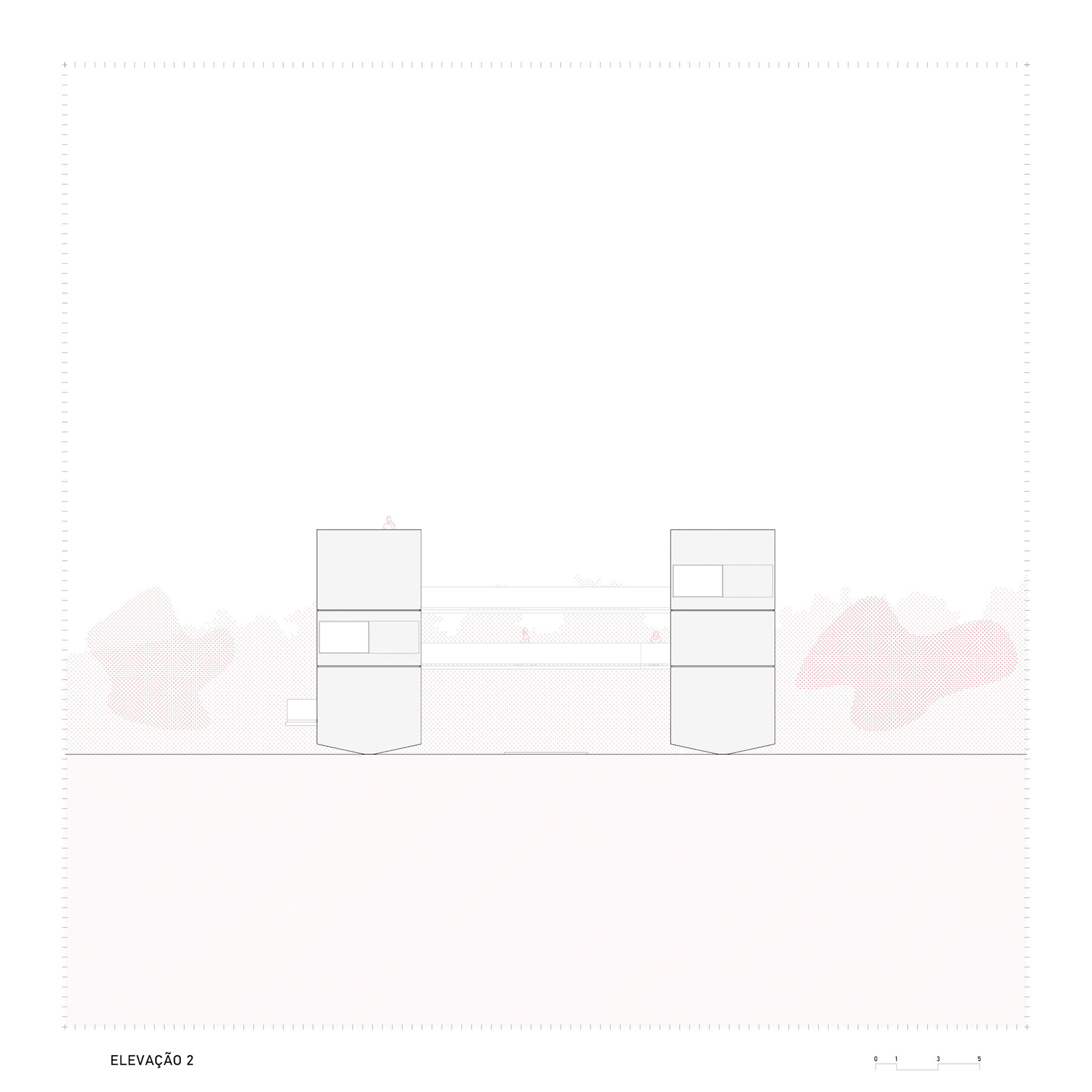
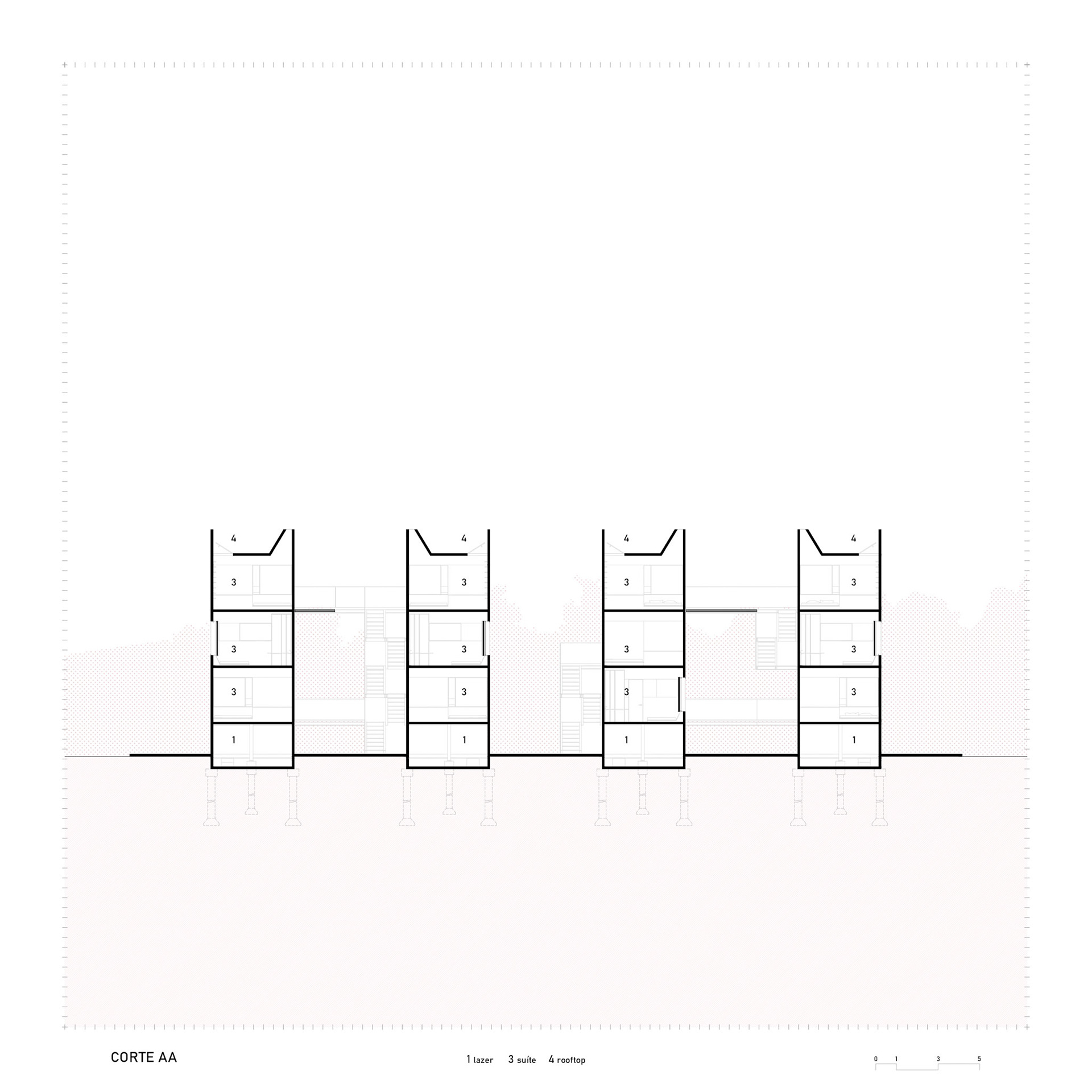
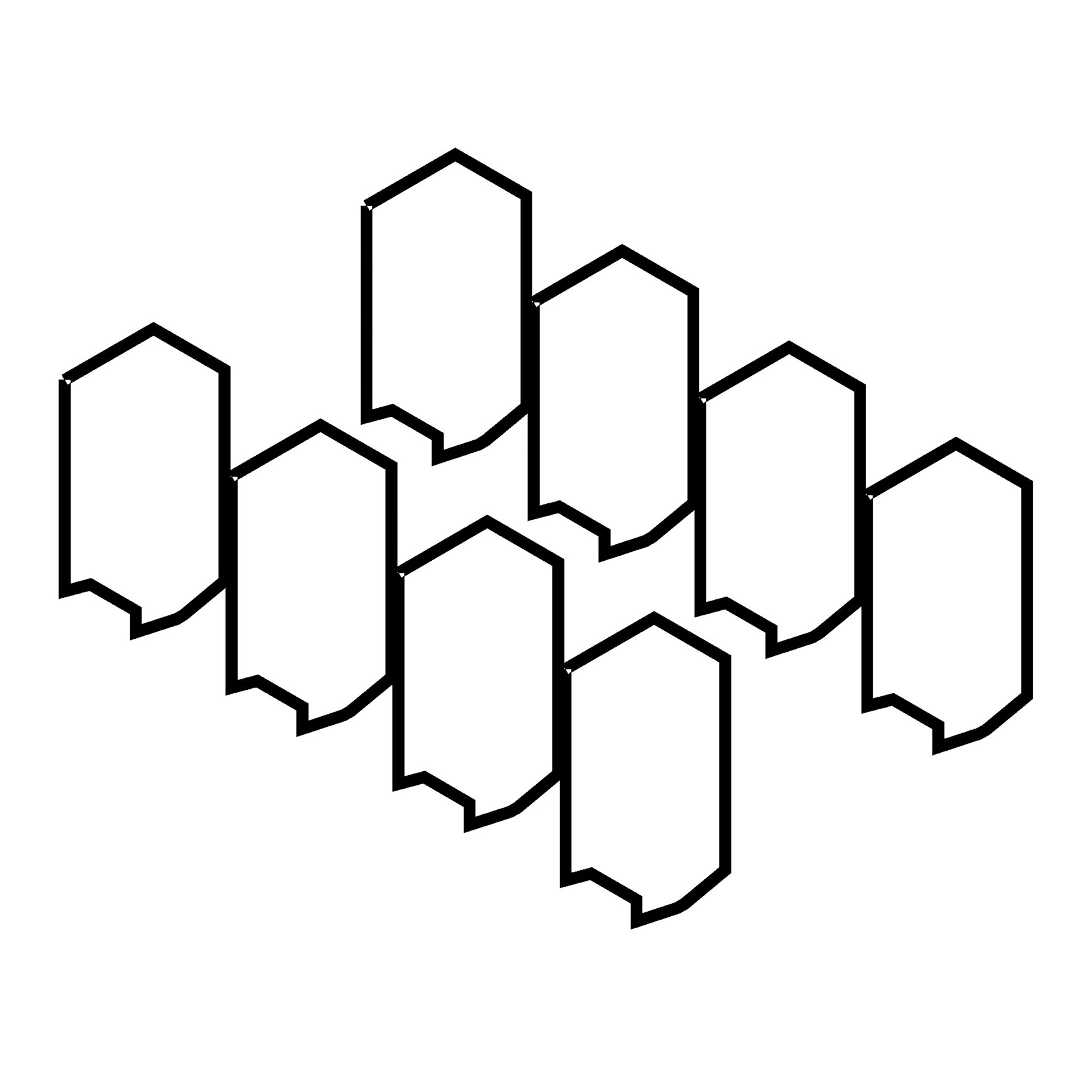
Em Tulum, diante da força histórica das ruínas maias e da floresta densa, a arquitetura precisa ter a coragem de ser pedra. O projeto surge como um conjunto de oito torres em concreto aparente, monólitos que não tentam mimetizar a natureza, mas estabelecer com ela um diálogo tenso e respeitoso.
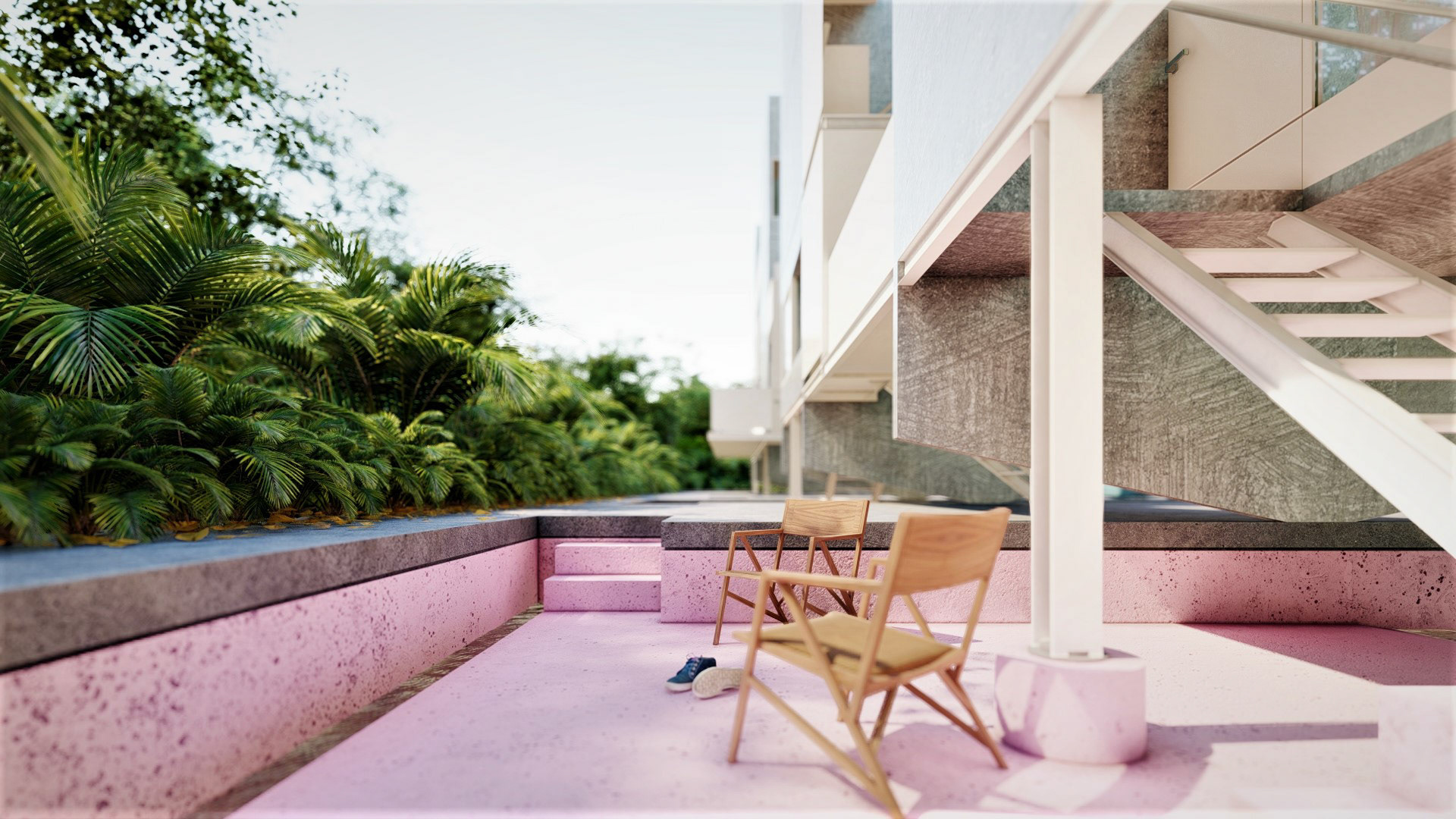
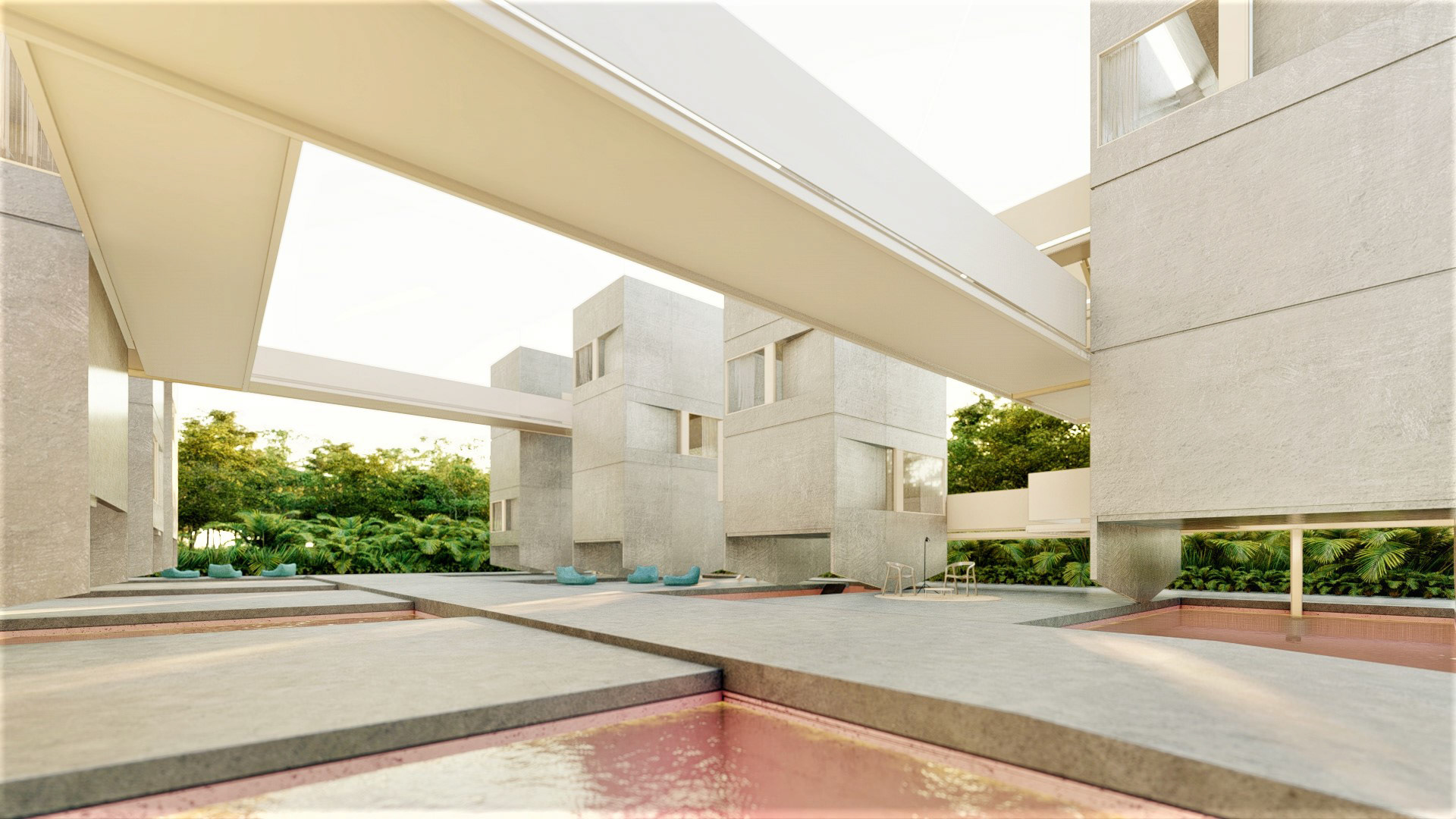
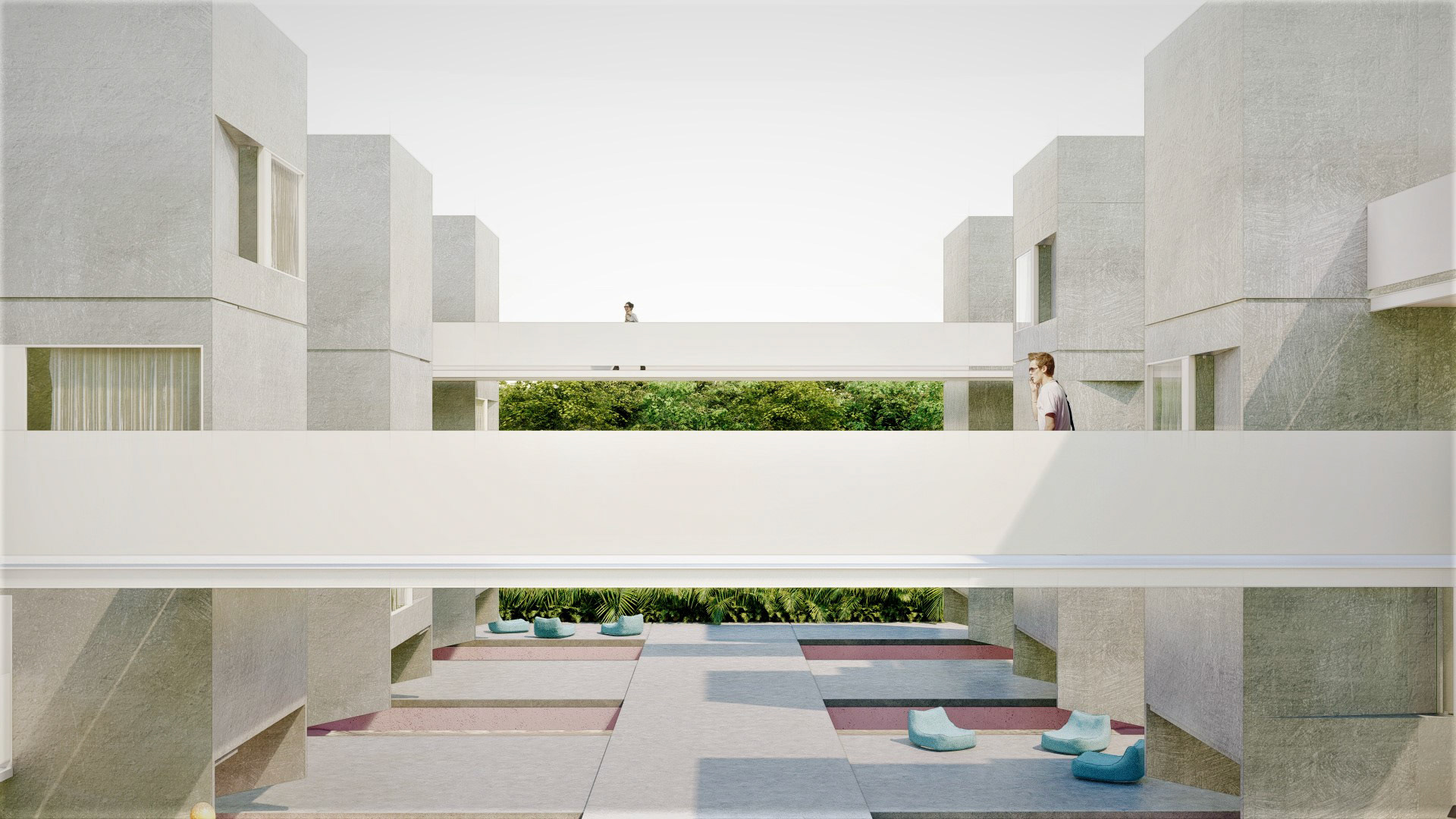
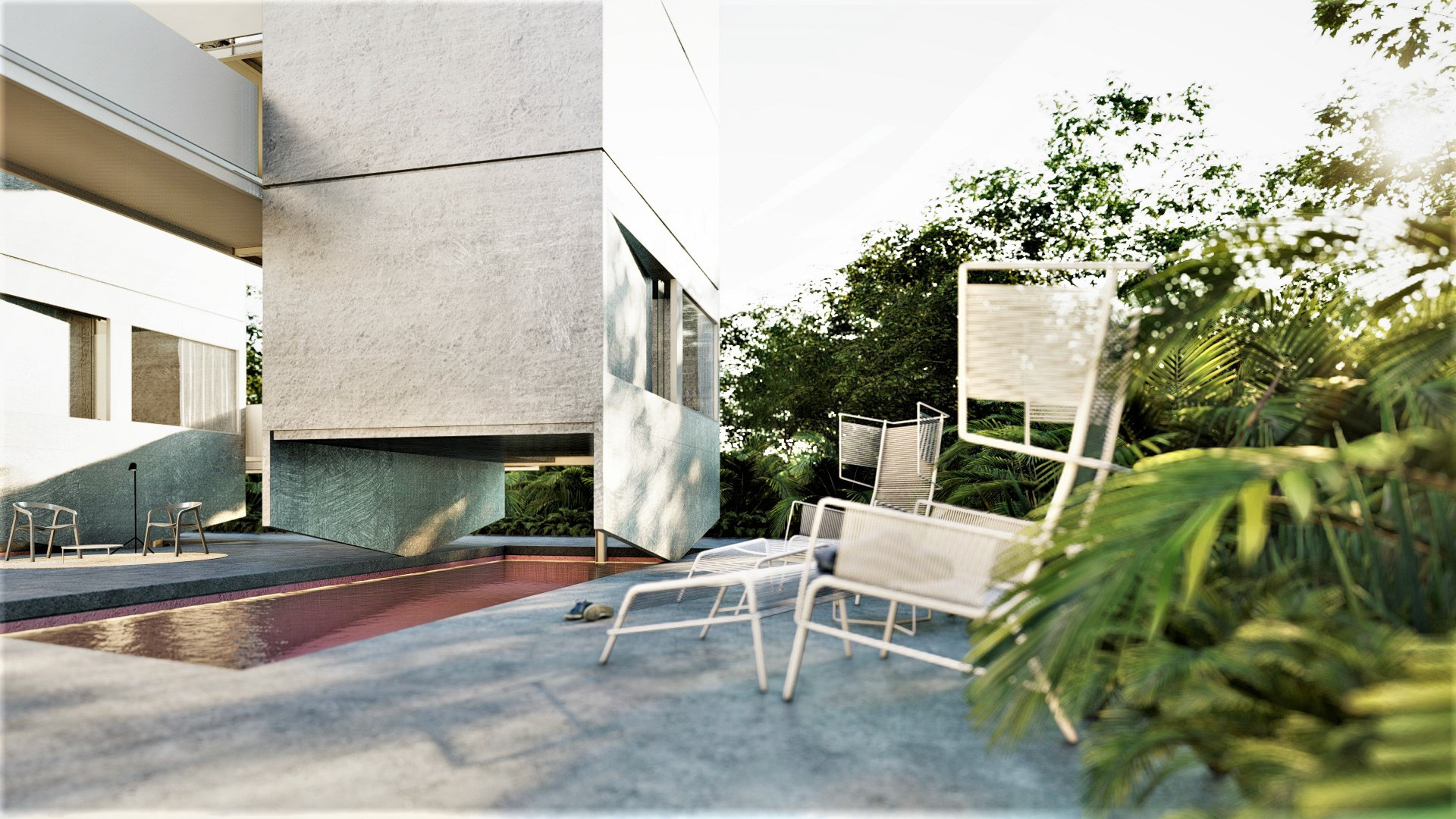
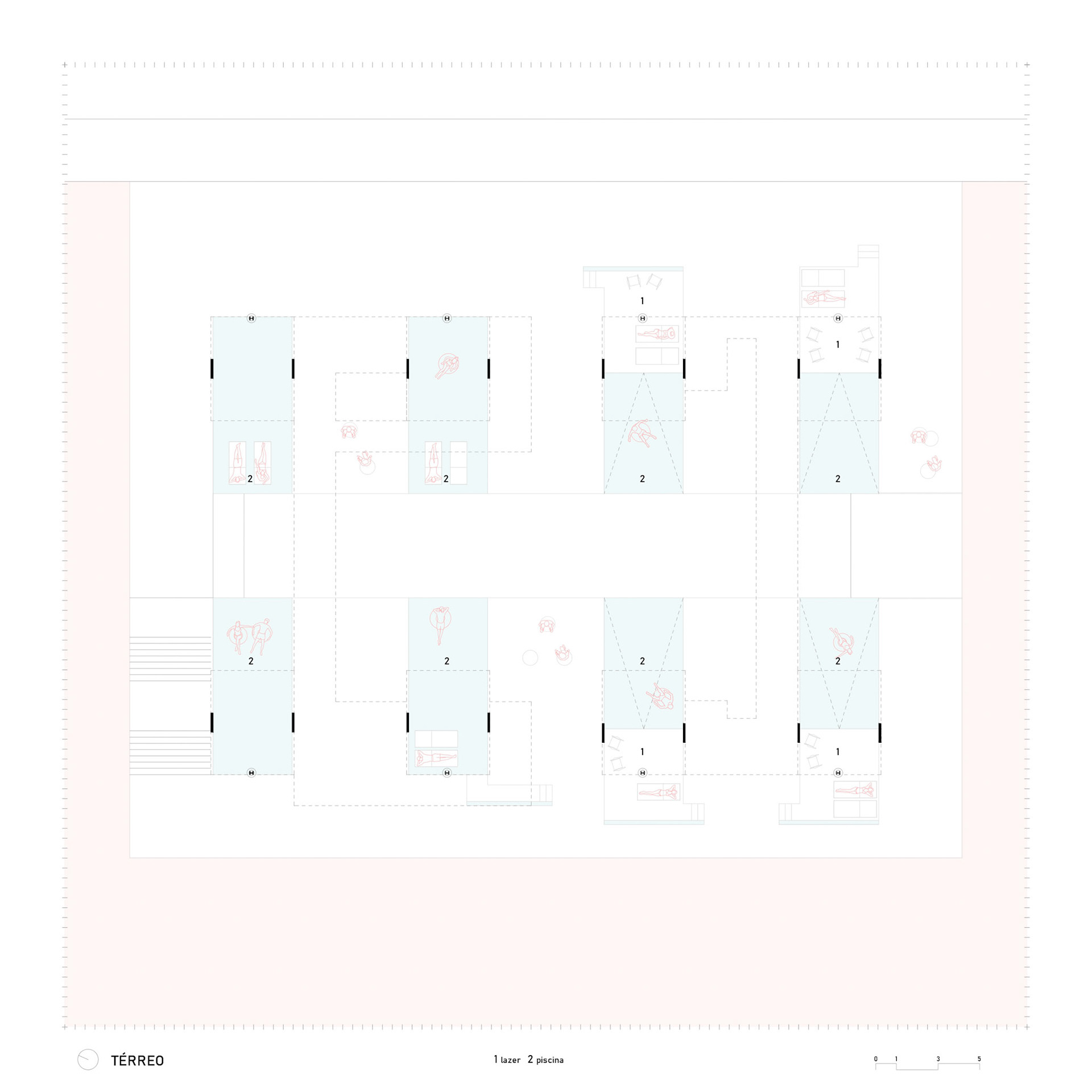
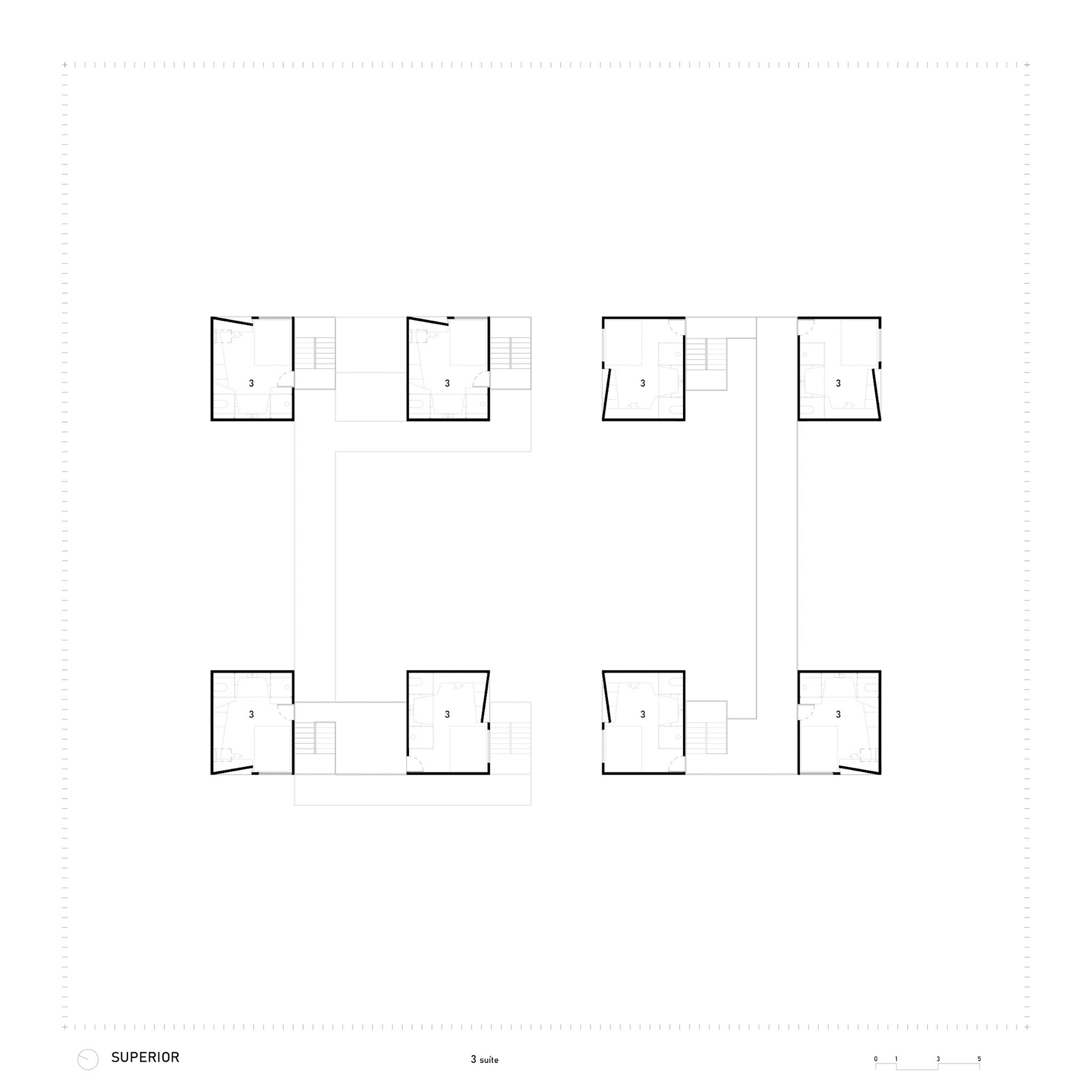
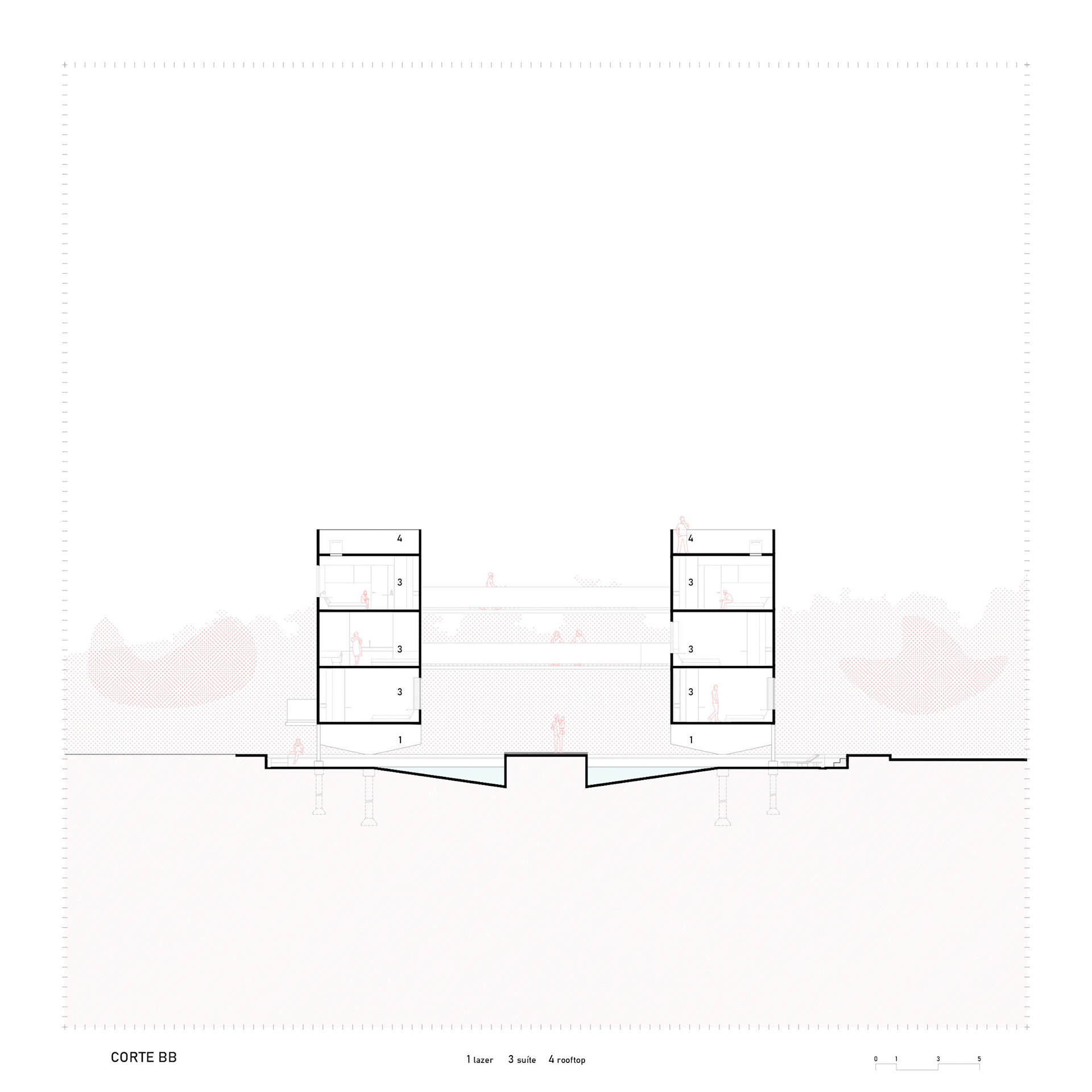
A lógica aqui não é visual, é vivencial. O acesso aos flats é uma incógnita proposital; não há corredores óbvios, mas um sistema de passarelas e escadas que obriga o indivíduo a descobrir seu caminho, tal como se explorasse uma ruína antiga. No pátio central, a água é a protagonista simbólica. Escavamos o chão e o cobrimos com concreto pigmentado rosa — uma saudação necessária a Luis Barragan e sua maestria com a cor — criando oito piscinas em rampa.
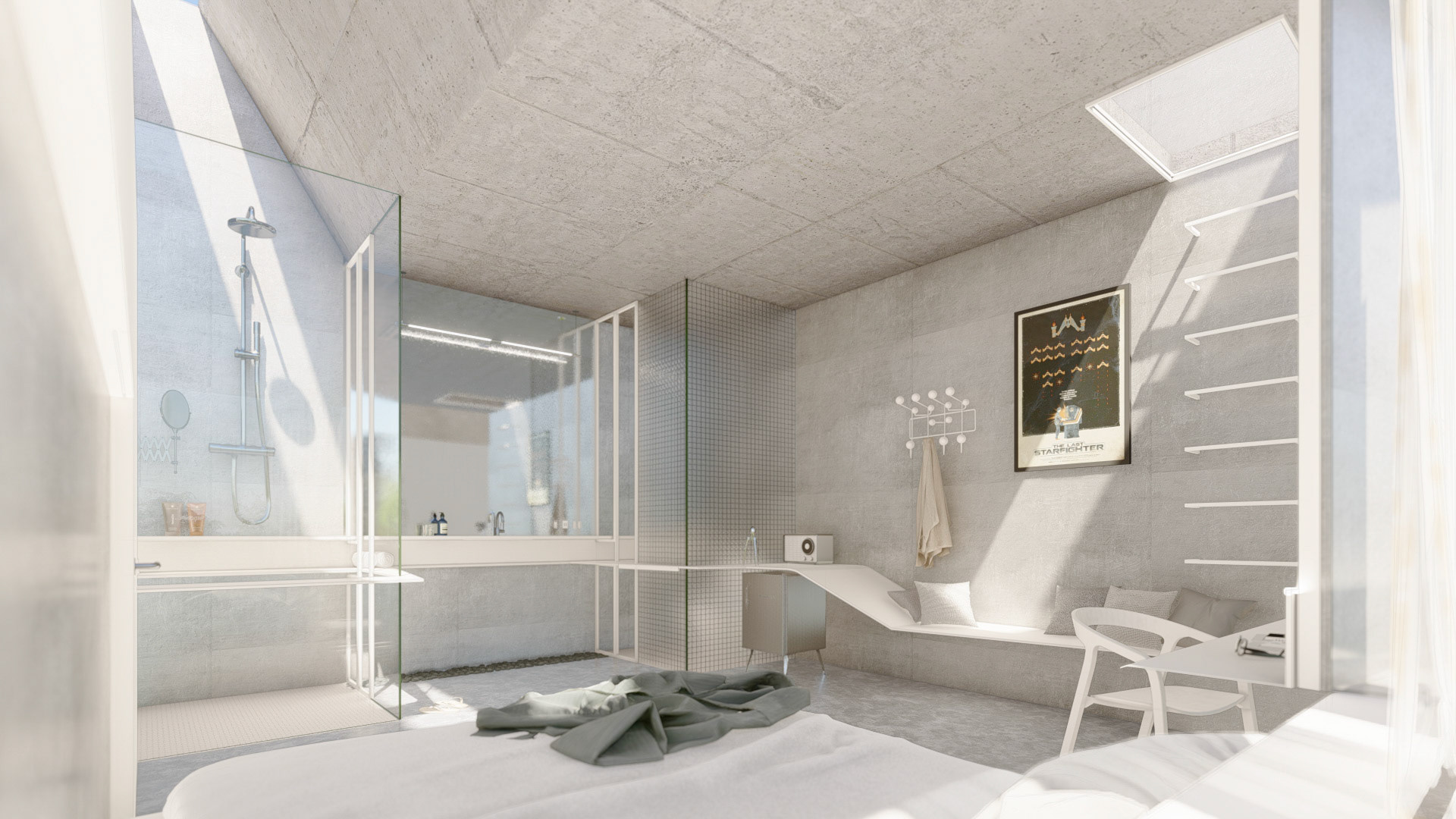
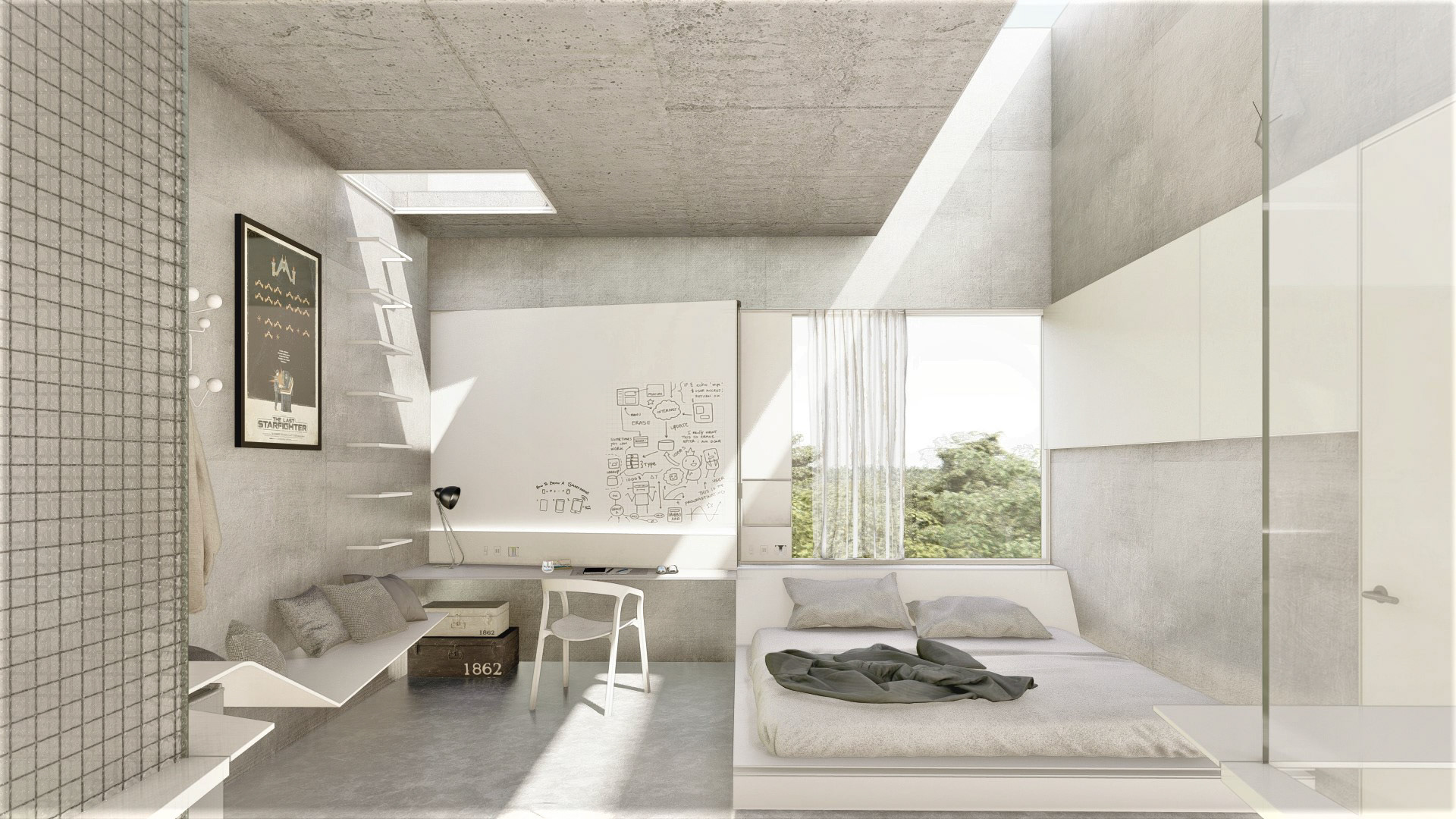
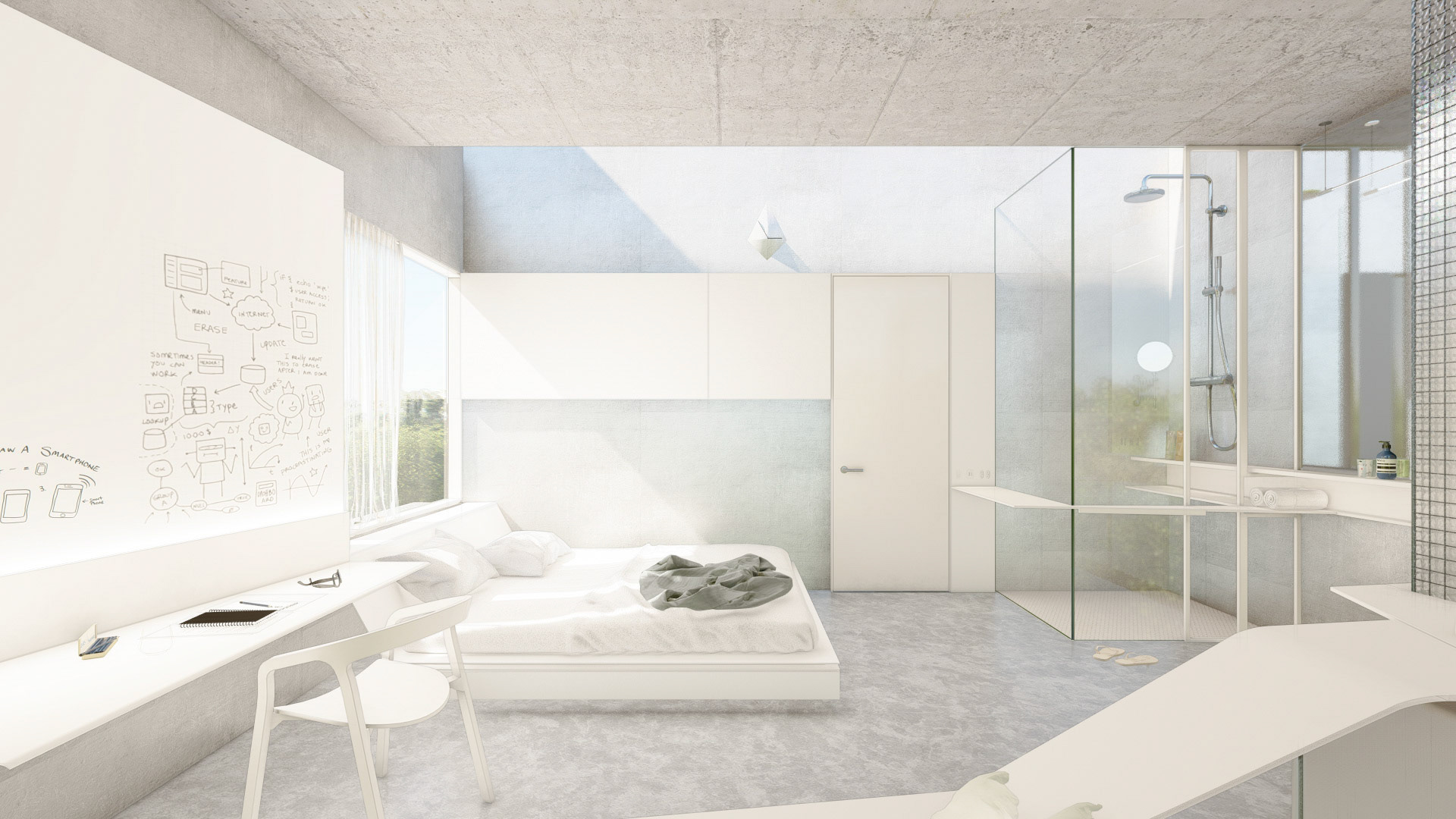
O nível da água é a medida da socialização. Quando rebaixado, isola o indivíduo em sua introspecção; quando transborda, une tudo num espelho único, coletivizando a experiência. O concreto e o metal unem a frieza do monólito à sutileza do ponto de apoio singelo, tocando o solo com delicadeza. É um espaço desenhado para o isolamento mental, onde a sombra e a luz desenham o tempo.
ENG
In Tulum, facing the historical force of Mayan ruins and the dense forest, architecture must have the courage to be stone. The project emerges as a set of eight towers in exposed concrete—monoliths that do not attempt to mimic nature, but rather establish a tense and respectful dialogue with it.
The logic here is not visual; it is experiential. Access to the flats is a deliberate variable; there are no obvious corridors, but a system of walkways and stairs that forces the individual to discover their path, just as if they were exploring an ancient ruin. In the central courtyard, water is the symbolic protagonist. We excavated the ground and covered it with pink pigmented concrete—a necessary salute to Luis Barragan and his mastery of color—creating eight ramped pools.
The water level is the measure of socialization. When lowered, it isolates the individual in their introspection; when it overflows, it unites everything into a single mirror, collectivizing the experience. The concrete and metal unite the coldness of the monolith with the subtlety of the singular point of support, touching the ground with delicacy. It is a space designed for mental isolation, where shadow and light draw time.